Understanding Bora Bora currency for luxury hotel guests
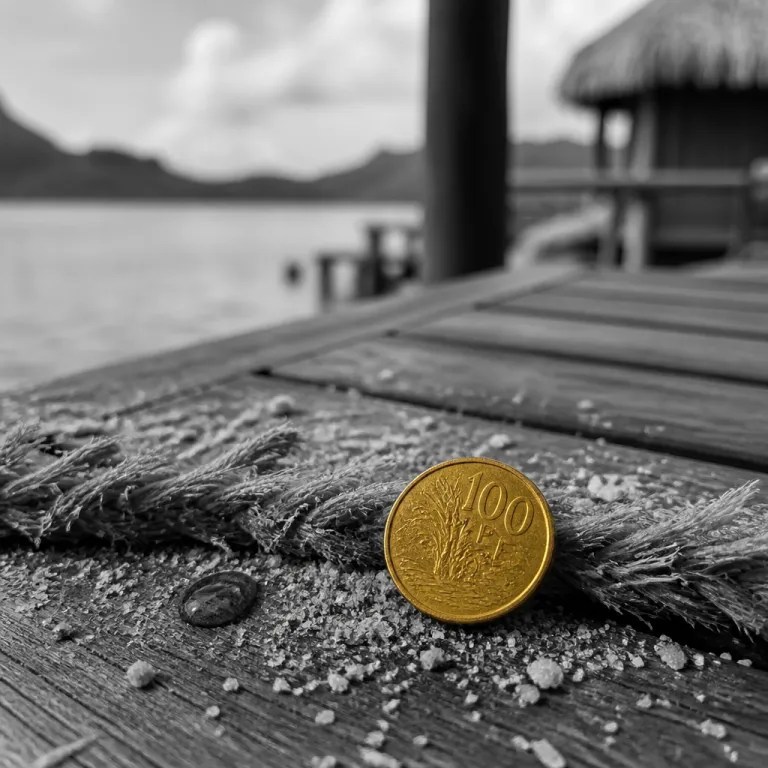
Bora Bora currency is the Pacific franc, officially called the CFP franc. This regional currency, written as XPF, is shared with other French Polynesian islands and offers a stable framework for premium travel. For luxury hotel guests, that stability makes planning easier and keeps the focus on lagoon views rather than exchange worries.
The CFP franc is issued by the Institut d’émission d’Outre-Mer (IEOM), which regulates the French Pacific franc (XPF). Because Bora Bora is part of French Polynesia, the currency is pegged to the Euro at a fixed exchange rate of 119.33 XPF per Euro, a rate that has remained unchanged since 1999 according to IEOM publications. This peg limits volatility and supports predictable pricing. High-end resorts appreciate this predictable market rate, as it simplifies long-term contracts and multi-currency accounting.
Travellers often compare XPF with USD when budgeting for Bora Bora. For example, IEOM data and major currency APIs in early 2024 showed daily market rates fluctuating around 100–115 XPF per USD, so a quick mental chart helps you translate menu prices and spa treatments into your home currency. For reference, see the IEOM statistics page on exchange rates and a historical USD–XPF snapshot from a reputable currency API archived in February 2024. Many luxury booking engines now let you view prices in several currencies, but final settlement on the islands usually happens in XPF francs.
From USD and Euro to XPF at luxury hotels
Most premium travellers arrive with a mix of USD, Euros and cards, then convert to XPF once in French Polynesia. You can exchange money at banks in Tahiti or Bora Bora, at some hotel front desks, or by withdrawing directly in CFP francs from ATMs. This approach usually tracks the mid-market exchange rate more closely than changing cash at departure airports.
When you book a luxury resort online, the booking engine might show prices in USD or another dollar currency for clarity. The actual charge, however, is often processed in XPF, so your bank applies its own exchange rates and may add hidden fees on top of the market exchange rate. Before confirming a peak-season stay, compare your bank’s USD–XPF and XPF–USD conversion conditions, especially for high-value overwater villa deposits described in this guide on booking a Bora Bora hotel in peak season.
Imagine a couple reserving a three-night overwater villa at 180,000 XPF per night. The total room cost is 540,000 XPF. If their bank converts at 110 XPF per USD with no extra margin, the bill is about 4,910 USD. If the bank quietly uses 105 XPF per USD plus a fee, the same stay jumps closer to 5,150 USD. For significant bills such as private yacht charters or full-board packages, paying directly in CFP francs and understanding your bank’s rate often reduces the risk of extra hidden fees.
Hidden gems in Bora Bora and how currency works off resort
Leaving the resort to explore hidden gems in Bora Bora changes how you use currency. Small family-run snack bars, lagoon tour operators and craft stalls on the islands usually quote prices in XPF francs only. Carrying some CFP francs in smaller denominations makes these off-the-beaten-path experiences smoother and more relaxed.
When you head to Matira Beach, Vaitape’s backstreets or lesser-known viewpoints highlighted in this guide to Bora Bora island attractions for luxury travellers, card terminals may be unreliable. In these situations, relying on USD or another foreign dollar currency can lead to improvised exchange rates and occasional hidden fees. Using local money in CFP francs keeps transactions transparent and supports small French Polynesian businesses directly.
Some independent guides accept USD or even Australian dollar notes, but they still calculate against the prevailing exchange rate for the Pacific franc. Because they do not operate with live market exchange tools, their personal chart of rates may differ from the official mid-market reference. For clarity, agree on the XPF amount first, then view any conversion into foreign currencies as a convenience rather than a right.
Comparing currencies across French Polynesia and nearby territories
Understanding how Bora Bora currency fits into the wider region helps with multi-island itineraries. The CFP franc is used across French Polynesia, New Caledonia and Wallis and Futuna, which means one set of CFP francs covers several islands without extra exchange steps. This shared Pacific franc system simplifies luxury yacht routes that combine Bora Bora with other French Polynesian islands.
While the currency name is sometimes confused with the historic French franc, the modern CFP franc is distinct and fully managed by the Institut d’émission d’Outre-Mer. Travellers occasionally refer casually to “old French francs” when speaking about earlier notes, yet all current notes and coins across these islands are CFP francs with consistent designs. When you view regional financial data, you may see references to Caledonia Wallis or Wallis Futuna, but the underlying market rate for XPF remains the same.
Guests sailing from the islands of Tahiti to Bora Bora often compare XPF with USD, Euro and Australian dollar values. Using a reliable currency converter that shows both USD–XPF and XPF–USD helps you track exchange rates across the trip. For deeper planning of luxury stays across the islands Tahiti and beyond, this curated guide to the best French Polynesia islands for luxury stays offers context on how currencies interact with premium hotel pricing.
Managing exchange rates, hidden fees and payment methods
Luxury travellers often underestimate how much exchange rates and hidden fees affect their final bill. When you send money to prepay a resort or private island buyout, your bank may apply a margin over the mid-market exchange rate for XPF, plus a flat transfer charge. Using specialist services that focus on sending money to French Polynesia can reduce these costs, especially for large deposits.
Before your trip, compare how your providers handle USD–XPF and XPF–USD conversions, and whether they use the real mid-market rate or a less favourable internal market exchange. Some credit cards add foreign transaction fees on every payment in CFP francs, while others waive them and follow the live market rate more closely. For high-value stays, this difference between exchange rates can equal a night in an overwater villa or a private lagoon tour.
To keep control, set up alerts on your preferred currency pair and view a simple chart of recent movements. While the CFP franc is pegged to the Euro, the USD and Australian dollar still fluctuate against it, which matters if your income is in those currencies. When you arrive on the islands, withdraw a modest amount of money in XPF, then rely on cards for larger hotel bills where security and dispute mechanisms are stronger.
Practical tips for using Bora Bora currency at luxury properties
On arrival in Bora Bora, settle into your luxury hotel and clarify payment details immediately. Ask reception whether your room, spa and activity charges will be held in XPF or in another currency such as USD, and whether any dynamic currency conversion will apply. Declining conversion into your home currency at the terminal usually keeps you closer to the fair mid-market exchange rate.
Many high-end resorts in French Polynesia allow you to send money in advance for special experiences, from private motu dinners to helicopter transfers between islands. When arranging these, request a pro forma invoice in CFP francs and check whether the quoted rate already includes all taxes and potential hidden fees. This level of clarity is especially important for complex itineraries that combine Bora Bora with other islands Tahiti or New Caledonia Wallis routes.
For day-to-day spending, split your budget between cards and cash in CFP francs. Use cards for large hotel or yacht payments where security matters most, and keep XPF notes for tips, taxis and small restaurants on the islands. This balanced approach respects the structure of Bora Bora currency while giving you flexibility if a card terminal fails or an ATM in French Polynesian villages runs out of money.
How Bora Bora currency supports a stable luxury travel environment
The structure of Bora Bora currency underpins the reliability that luxury travellers expect. A fixed peg between the CFP franc and the Euro, managed by the Institut d’émission d’Outre-Mer, helps maintain a stable market rate that benefits both hotels and guests. This stability encourages long-term investment in premium resorts and high-quality services across the islands.
Because the same CFP francs circulate across French Polynesia, New Caledonia and Wallis and Futuna, regional operators can plan confidently. Yacht charter companies, inter-island airlines and high-end tour providers all price in XPF, then translate into USD, Euro or Australian dollar values for international clients using transparent exchange rates. When you view their proposals, check whether they follow the official mid-market exchange or add a private margin that could hide extra costs.
Travellers sometimes ask: “Can I use US dollars in Bora Bora?” and “Are credit cards accepted in Bora Bora?” and “Where can I exchange currency in Bora Bora?” and the clear answer from local guidance is: “US dollars are accepted in some places, but XPF is preferred.” and “Yes, especially at resorts and major establishments.” and “At banks, currency exchange offices, and some hotels.” This concise advice reflects how Bora Bora currency functions in real life, especially for guests staying in luxury properties. By respecting the local CFP franc system, you support the French Polynesian economy while enjoying a smoother, more transparent travel experience.
Key figures on Bora Bora currency and luxury travel
- The official exchange rate between the Euro and the CFP franc is 119.33 XPF per Euro, according to the Institut d’émission d’Outre-Mer, which provides a stable reference for pricing luxury hotel stays.
- Daily market rates between the US dollar and the CFP franc typically move within a band of roughly 100–115 XPF per USD, based on IEOM statistics and major currency APIs consulted in early 2024, helping travellers estimate on-site costs in their home currency.
- Bora Bora shares the CFP franc with other French Pacific territories, meaning one currency covers French Polynesia, New Caledonia and Wallis and Futuna, which simplifies multi-island luxury itineraries.
- Digital payments and card usage have increased significantly in Bora Bora, especially at resorts and major establishments, reducing the need to carry large amounts of cash in XPF.
- Local guidance consistently recommends carrying some CFP francs for small purchases, as US dollars are accepted only in some places and usually at less favourable informal exchange rates.
FAQ about Bora Bora currency for luxury hotel guests
Which currency is used in Bora Bora for hotel payments?
The official currency in Bora Bora is the CFP franc, written as XPF. Luxury hotels usually price and settle bills in XPF, even if they display estimates in USD or Euros on booking engines. Your bank then converts the charge from XPF into your home currency using its own exchange rate.
Can I pay in US dollars at my resort in Bora Bora?
Some resorts and shops on the islands accept US dollars, especially in tourist areas. However, they often apply their own conversion rate, which may be less favourable than the official mid-market rate for USD–XPF. For transparency and better value, paying directly in CFP francs is usually preferable.
Where should I exchange money into XPF for my trip?
You can exchange money into XPF at banks and currency exchange offices in Tahiti or Bora Bora, and at some hotel front desks. Many travellers prefer to withdraw CFP francs directly from ATMs on arrival, which often track the market exchange rate more closely. Always check your bank’s foreign transaction fees before relying on this method.
Are credit cards widely accepted in Bora Bora luxury hotels?
Credit cards are widely accepted at luxury resorts, major restaurants and high-end activity providers across French Polynesia. Visa and Mastercard are the most commonly used, while some places also accept American Express. Smaller local businesses and remote hidden gems may still prefer cash in CFP francs.
How much cash in XPF should I carry for hidden gems and excursions?
For guests staying in luxury properties, carrying the equivalent of a few hundred Euros in CFP francs usually covers taxis, tips and small local purchases. Larger expenses such as private excursions or fine dining can be paid by card in most cases. Refill your cash at ATMs in Vaitape or Tahiti if you plan to explore more remote islands.