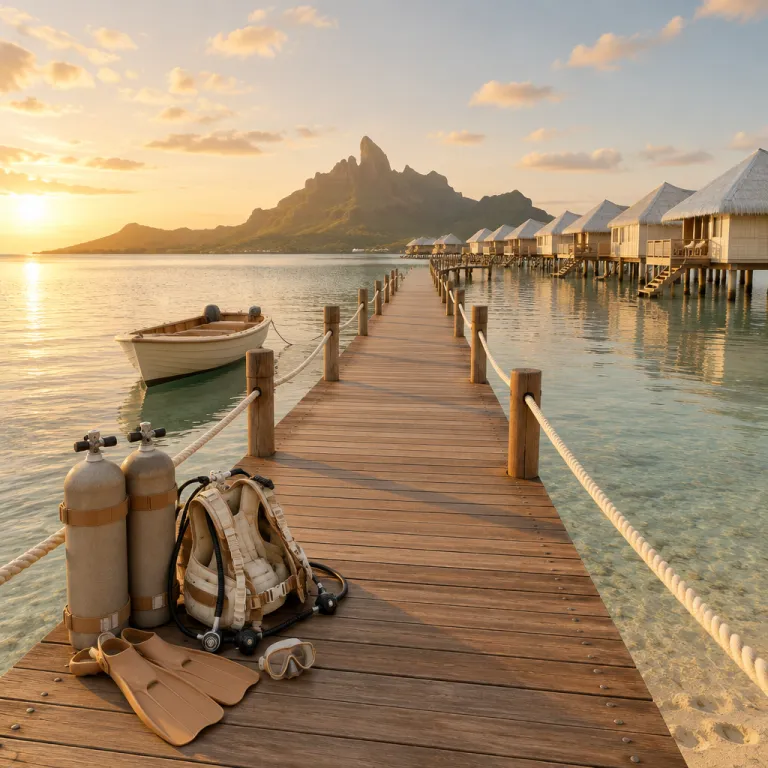
Why Bora Bora is the gentlest classroom for nervous first‑time divers
To learn to scuba dive Bora Bora beginner style, you need water that feels like a warm embrace rather than a test. The lagoon around the island and its satellite islands offers exactly that, with shallow sandbanks, sheltered passes and coral gardens that keep conditions calm for most of the day. For a solo traveler choosing between different islands in French Polynesia, this combination of serenity and spectacle makes Bora one of the best places to try scuba diving without pressure.
The lagoon’s visibility often stretches beyond 20 metres, so your first underwater breaths come with cinematic views instead of murky guesswork. Because the reef encircles the main island, waves break far away from the usual beginner dive site areas, which keeps water dives gentle and helps instructors keep ratios low and attention high. You stay close to the surface and close to the boat, yet the coral and tropical fish density rivals more advanced places diving that demand deeper dives and stronger currents.
Luxury hotels here understand that many guests are anxious about sharks, depth and equipment, so concierges now brief guests carefully before they even meet the diving French Polynesia professionals. They will explain that reef sharks such as blacktip reef and the occasional grey reef patrol the outer reef, while beginner dives good for first timers usually happen in shallower, calmer zones where encounters are brief and controlled. When you book through a premium property, the équipe will typically work only with established bora diving operators who specialise in making diving easy for hesitant guests.
Try dive versus certification: choosing the right level for your trip
Most guests who learn to scuba dive Bora Bora beginner level start with what professionals call a try dive, sometimes marketed as a discovery scuba diving experience. This is a single supervised immersion, not a full open water course, and it focuses on comfort, breathing and simple skills rather than exams or theory. For a short trip where your time is divided between overwater villas, reef excursions and spa rituals, a try dive gives you the underwater highlight without turning your holiday into homework.
A full open water certification in French Polynesia usually requires several days, multiple dives and structured teaching, which can be rewarding but intense. If this is your first trip to French Polynesia and you are splitting your stay between Bora and perhaps Moorea or other islands, you may prefer to keep your schedule flexible and sample different marine experiences. Many guests use a Bora try dive as a test, then complete their certification later at home or on a future trip once they know that scuba diving genuinely suits them.
Luxury hotels on the island will help you decide which path fits your health, confidence and available day count. If you tell the concierge that you want to focus on lagoon life rather than logbook milestones, they will usually steer you toward one or two guided water dives with a private instructor. Those who already feel at ease underwater, or who have snorkeled extensively with manta rays and reef sharks, might extend their stay to include a structured course with more dives and deeper exploration of the outer reef.
What actually happens on your first lagoon dive
When you learn to scuba dive Bora Bora beginner style, the process starts slowly, often on the deck of a dive boat or in a shallow hotel pool. Your instructor will show you how the regulator works, how to clear a mask and how to equalise your ears, all while you stand or kneel where you can still put your feet down. This first briefing usually takes less than an hour, but it sets the tone for the entire underwater experience and gives you space to voice every fear.
Once you move from pool to lagoon, the first descent is deliberately uneventful and very controlled. You hold a line or your instructor’s arm, you follow their breathing rhythm and you stop every metre or two to check ear pressure and comfort, which makes diving easy to manage even for those who dislike deep water. Depths for these initial dives good for beginners usually stay between 3 and 6 metres, where coral gardens, tropical fish and the soft sand floor create reassuring visual reference points.
From there, the lagoon does the work, revealing a slow parade of marine life that distracts from any lingering nerves. You may hover above coral heads while manta rays glide in the distance, or watch small reef sharks cruise the edge of the reef as your guide keeps you at a safe, respectful range. Between short drift dive sections and calm pauses over bommies, you start to understand why many guests say that one gentle Bora diving session changed how they think about the underwater world.
Managing fear, health limits and expectations under the surface
Even in the world’s clearest lagoon, learning to scuba dive Bora Bora beginner level can feel intimidating, especially for solo travelers who do not have a partner’s hand to squeeze. Common anxieties include breathing only through the mouth, the idea of sharks nearby and the fear of not being able to surface quickly enough. Good instructors in diving Bora settings know this and will usually keep ratios low, often one professional for one or two guests, so they can respond the moment your body language changes.
Health matters too, and luxury hotels have a responsibility to guide guests honestly before they book any trip underwater. If you have heart or lung conditions, recent surgery or chronic ear problems, you should speak with a doctor at home before planning any water dives in French Polynesia, even shallow ones. Some guests simply realise that they prefer snorkeling above the reef, and for them, curated experiences such as snorkeling without touching the reef offer rich marine encounters without the commitment of scuba diving.
For those who do proceed, setting expectations keeps the experience elegant rather than overwhelming. You may or may not see mantas, manta rays or lemon sharks on a given day, and grey reef or blacktip reef sharks tend to stay closer to the passes than to the inner lagoon coral gardens. What you can count on is time spent in warm, clear water, close to the island yet far from crowds, with an instructor who will call the dive the moment you feel that your comfort threshold has been reached.
From lagoon curiosity to lifelong diver: where a Bora try dive can lead
Many guests arrive in Bora thinking they will learn to scuba dive Bora Bora beginner level once, tick a box and move on. Then they surface from their first dive bora experience, still buzzing from the silence and the slow ballet of tropical fish, and suddenly the idea of future trips organised around places diving feels very real. The lagoon becomes not just a backdrop to your overwater villa, but the main reason to return to French Polynesia.
If you catch the bug, your instructor will usually suggest a path toward full open water certification that fits your travel style and time constraints. Some travelers schedule a second or third bora diving session during the same trip, perhaps exploring a new dive site with slightly more current or a gentle drift dive along the outer reef. Others plan a future itinerary that links Bora with Moorea and other islands, using each island’s different reef structures and marine life to build confidence step by step.
Luxury hotels increasingly weave this progression into broader wellness narratives, pairing morning water dives with spa rituals or yoga sessions that help the body integrate new sensations. Programs such as the Awaken retreat concept show how time underwater can sit alongside breathwork, nutrition and movement as part of a holistic stay. For solo explorers, this means your first cautious dive bora moment can evolve into a recurring ritual, a reason to return to the same island and reef, watching how the coral and marine life change over the years.
Choosing the right luxury base for a first‑time dive‑focused stay
Where you sleep shapes how you learn to scuba dive Bora Bora beginner level, because access and logistics matter as much as lagoon beauty. A resort on a private motu often offers faster boat rides to sheltered coral gardens, while a property on the main island can give you more flexibility with last minute dives. When you evaluate hotels, look beyond the overwater villa photos and ask how closely they work with established diving French Polynesia operators.
For a dive curious solo traveler, the best places combine strong marine ethics with discreet, efficient service. You want a concierge who understands the difference between a gentle lagoon dive site and a more exposed pass, and who will schedule your water dives at times of day when light and tide make conditions forgiving. Some properties even design activity programs that let you move from a morning reef immersion to an afternoon of lagoon facing spa treatments or curated excursions, as outlined in guides to elegant ways to enjoy Bora Bora activities from your hotel.
Ethical considerations should sit alongside comfort and views when you choose. Ask how the hotel and its partners protect coral, manage encounters with reef sharks and mantas, and educate guests about responsible interaction with marine life around the island. A property that treats the lagoon as its most precious asset, not just a backdrop for marketing, will usually partner with guides who keep dives good for both guests and the reef, ensuring that your first underwater steps in French Polynesia leave only bubbles behind.
FAQ
Do I need a certification to try scuba diving in Bora Bora ?
You do not need a certification to join a supervised try dive in Bora Bora, as instructors stay shallow and handle all equipment. These introductory dives are designed for beginners and follow strict safety standards set by international training agencies. Full open water certification is only required if you want to dive independently or join more advanced dives on future trips.
How deep will I go on my first dive in the lagoon ?
Most beginner sessions in the lagoon stay between 3 and 6 metres, which keeps you close to the surface and the boat. At these depths you still see abundant coral, tropical fish and often reef sharks at a distance, without the pressure changes of deeper dives. Instructors adjust depth based on your comfort, so some guests remain even shallower on their first underwater experience.
Is it safe to dive around sharks in French Polynesia as a beginner ?
Reef sharks such as blacktip reef and grey reef are common in French Polynesia, but beginner dives usually take place in calmer areas where encounters are brief and controlled. Professional guides maintain distance, avoid feeding and focus on observing natural behaviour without disturbing the animals. If you feel uncomfortable, you can always choose dive sites where sharks are less frequently seen.
Can I try scuba if I am not a strong swimmer ?
Being a confident swimmer helps, but you do not need to be an athlete to join a closely supervised try dive. You wear a buoyant jacket, fins and a mask, and you are always accompanied by an instructor who manages your position in the water. If you are very uneasy in the ocean, starting with guided snorkeling above the reef can be a better first step.
How should I choose a hotel in Bora Bora if I want to focus on diving ?
Look for properties that work with established bora diving operators, offer flexible boat schedules and show clear respect for the reef and marine life. Ask about instructor ratios, typical dive site choices for beginners and how they handle weather or visibility changes. A hotel that answers these questions clearly will usually provide a smoother, safer experience when you learn to scuba dive Bora Bora beginner level.